The Four Types of Writer Burnout (And Which One Is Yours)
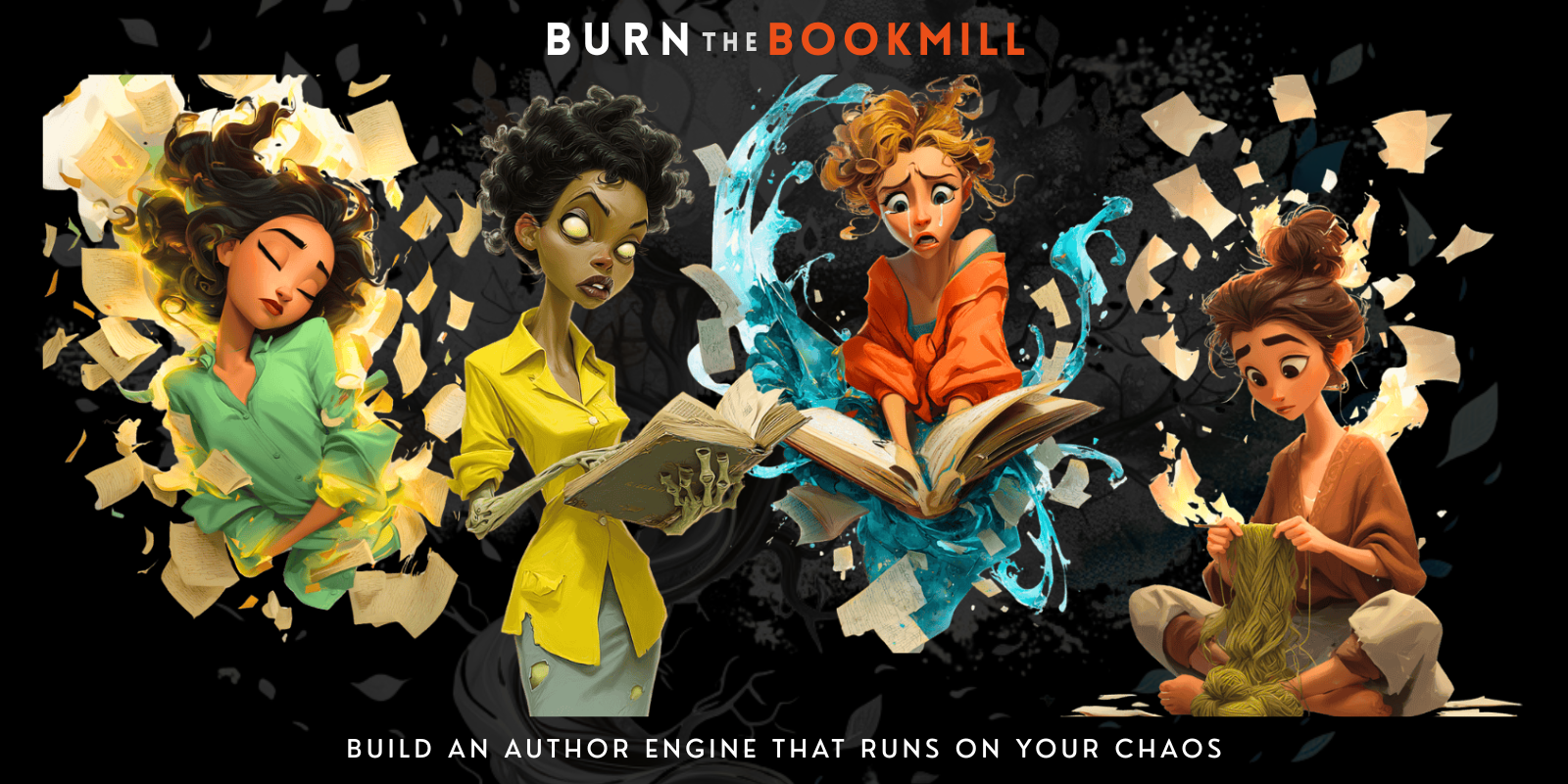
Writer burnout comes in four distinct patterns, and each one needs a different fix. LoreKeepers burn out from loyalty to a blueprint built for someone else. Heartweavers burn out from over-identification with the work. Mythmakers burn out from over-optimization. Wildscribes burn out from confinement. Misdiagnose which one you're in and the standard advice makes it worse.
I'm So Burned Out, I'm __________
Every time I’ve burned out, I’ve told myself it was because I wasn’t disciplined enough. Not organized enough. Not focused enough. Not committed enough.
So I did what most indie authors do. I downloaded another planner. I bought another productivity course. I redesigned my launch calendar. I promised to “do better this time.”
And then six months later, I was more exhausted than before. I’ve burned out at least five times, and the recovery time takes longer and longer every single time.
But I love writing and publishing. I love the indie author community. I love talking about books. I love reading books and studying books and talking to other authors about their books and hanging out with them as they write - which, if we could do virtual write-ins, that would be so cool because my Heartweaver author self is lonely.
That’s why I’ve focused so hard to figure out how to keep this from happening because I’m not the only one who’s burned out. Most of the authors I started with are no longer writing or publishing. Only a handful of them still have names, and I hate that. They were and are great people with fantastic stories the world needs to experience.
Here’s what my research uncovered:
Burnout in indie publishing is rarely about effort. It’s the same thing that brings down contracting and construction businesses: system architecture.
How unsexy is that?
Now look, I’ve grown construction businesses from $100K/yr to $4M/yr with this process. The trick to indie author publishing careers is understanding how to take something creative and make it sustainable with the most chaotic personality types. So, I had to look—really look—at what we do and how we approach things to explain why we burn out so hard and so fast.
Here’s the thing I discovered in my deep dive:
Not all burnout feels the same.
It depends on how you’re wired. I’m going to break each one of these down this week, looking at how we burn out and how to come back or prevent that. What I want you to do today is to read through the following and see which one or two feels the most like you. Now, I say two because I’m a hybrid and I think there are a lot more of me out there. We don’t all fit neatly into one box. That’s just not who we are. So, be flexible.
1. The Lorekeeper Burnout
Lorekeepers look responsible because you are.
You followed the plan.
You hit the deadlines.
You built the spreadsheet.
You executed the strategy exactly as taught.
So, what does burnout look like for you? It looks like you’re tired of carrying all of it. You feel a little like a zombie, just moving through the motions, doing what someone else told you and wondering why you can’t get your lucky break.
Writing feels like obligation.
Marketing feels like duty.
Readers feel like responsibility.
You’re still showing up.
But the light is dim.
Lorekeepers don’t burn out from chaos.
They burn out from loyalty to a blueprint that was never designed for them.
Does this feel like you? Then, read as I break it down.
2. The Heartweaver Burnout
Heartweavers burn out quieter.
You poured yourself into the story.
You tied meaning to impact.
You believed this book mattered.
When sales dipped — or engagement slowed — your confidence went with it. And let me just tell you, your inner voice is not your friend. She’s a real mean BeOTCH whose super power is keeping you in your place—somewhere at the bottom of the pit you fought so hard to dig for yourself.
You start asking:
Does this even matter anymore?
Maybe I’m not good enough.
Maybe I shouldn’t be doing this at all.
Heartweavers don’t burn out from laziness.
They burn out from over-identification and not enforcing good boundaries.
When the work feels like the self, every setback feels personal.
Does this feel like you? Then, read the break down.
3. The Mythmaker Burnout
Mythmakers look intelligent and like they always know what they’re doing.
You analyzed everything.
Refined the positioning.
Tweaked the funnel.
Redesigned the release plan.
You built a system so airtight it should have worked. But it didn’t for whatever reason. You took all the best parts of all the classes and self-help books you could. You reverse-engineers so many authors’ approaches so you could do something better, and now you’re just tired of tweaking.
But you’re exhausted.
Not from writing.
From thinking.
Mythmakers don’t burn out from lack of discipline.
They burn out from over-optimization.
Perfection becomes procrastination in a tuxedo.
Does this feel like you? Then, read the break down.
4. The Wildscribe Burnout
Wildscribes look restless and, often, like they don’t take their writing seriously.
You were excited.
You had momentum.
You built something that felt alive.
Then the structure started feeling like a cage, and you run away to something kenetic, that feels more grounded. You would rather do anything with your hands or explore or experience than to feel like you’re working in a cage, and it pisses you off that the thing you dream of being is wrapped in a prison.
So you stalled.
Or pivoted.
Or disappeared.
Wildscribes don’t burn out from inability.
They burn out from confinement by running toward kenetic energy that feels comfortable.
Does this feel like you? Then, read the break down.
Real Indie Author is a reader-supported publication.
Why This Matters
If you misdiagnose your misalignment, you apply the wrong fix. I’ve seen this so many times. I’ve actually offered this same advice, trying to help and not quite understanding the problem.
You tell a Heartweaver to push harder.
You tell a Wildscribe to be more disciplined.
You tell a Mythmaker to refine more.
You tell a Lorekeeper to double down.
And each one digs themselves deeper in a hole they can’t get out of. Instinctively, that’s what we do. When we’re in trouble, these are our go-to’s because we see other people doing this and it works for them. But it doesn’t work for use because we’re not wired that way.
This Week
I’ve broken down each burnout pattern in depth:
How it starts.
What it looks like when it’s subtle.
What it looks like when it’s advanced.
And what structural shift actually stabilizes it.
If one of these felt uncomfortably accurate, start there.
This is how we reset. This is how we reprogram our minds and souls to succeed.
By creating/using a system that matches who we are and not what we wished we would have been.
Like I said. This is unsexy as all get out, but it works.
Isn’t it time you started putting some energy back your tank instead of just letting it all pour out?
What are the different types of writer burnout?
Four patterns, each tied to how a writer is wired. Loyalty burnout from following a system built for someone else. Identity burnout from tying your worth to the work's reception. Optimization burnout from endless refining instead of shipping. Confinement burnout from structure that starts feeling like a cage.
Why do productivity tips make my burnout worse?
Because the standard advice targets the wrong cause. Telling a Heartweaver to push harder, a Wildscribe to be more disciplined, a Mythmaker to refine more, or a LoreKeeper to double down just deepens the hole each one is already in. Misdiagnosed misalignment gets the wrong fix.
Is writer burnout about laziness or lack of discipline?
No. In indie publishing, burnout is rarely about effort — it's about system architecture. The same structural failure takes down construction businesses. Writers who burn out are usually working harder than anyone, inside a structure that was never built for them.
Can you burn out in more than one way?
Yes. Hybrid writers combine two archetypes into one integrated way of working, so burnout can show up as a blend of two patterns. If two of the four descriptions feel accurate, read both — don't force yourself into a single box.